
Kitchen guide
Kitchen sink drain care: what goes down and what stays out
A kitchen drain clogs with food and grease, not hair. Most of the care happens before anything goes down.
Bathroom clogs are hair. Kitchen clogs are food scraps that settle in the trap and grease that cools and coats the pipe until the scraps stick to it. A hair tool is the wrong answer here; the right one is keeping the scraps and the fat out of the drain in the first place.
Strain everything
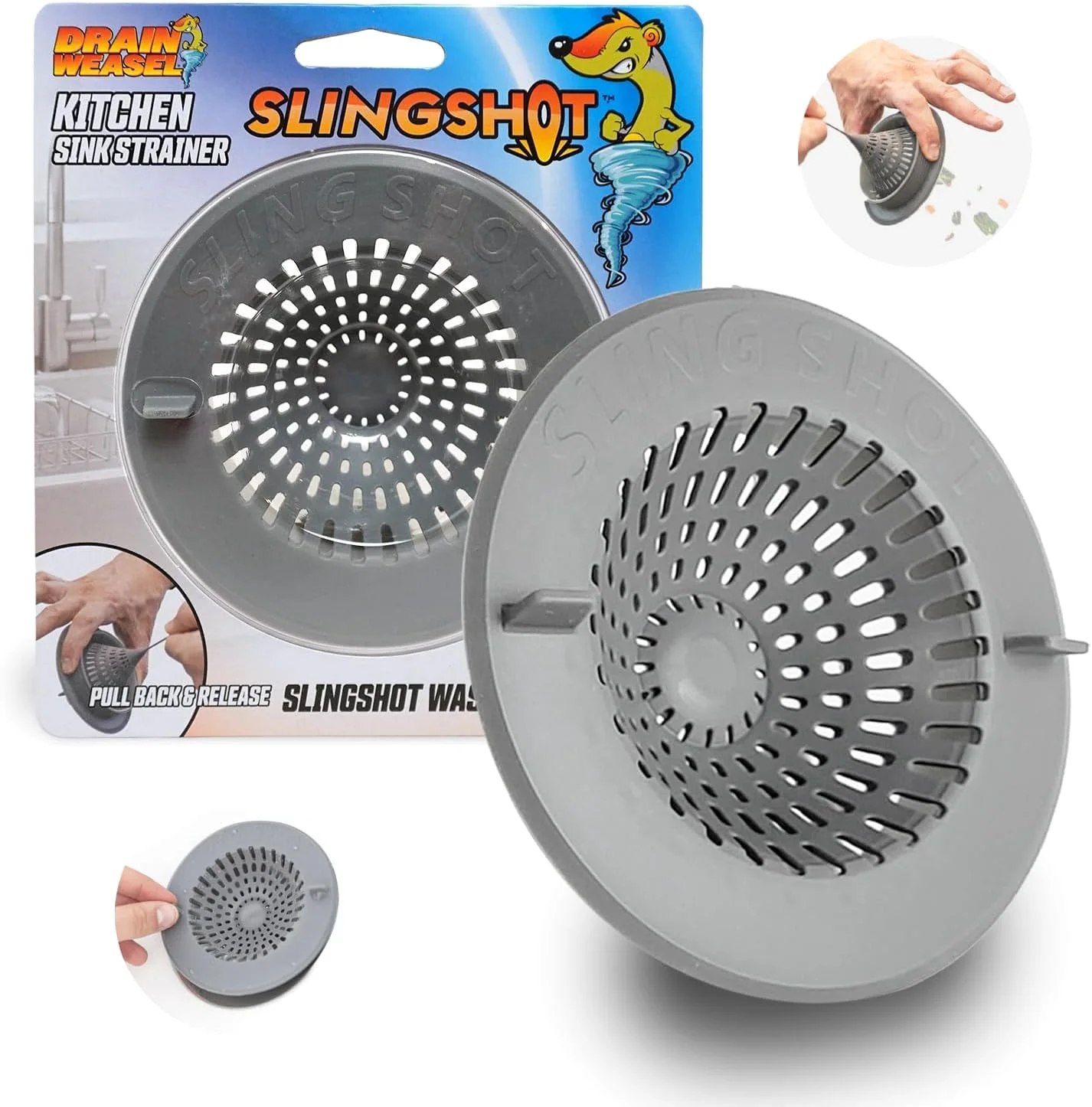
A strainer in the drain stops rice, peel and coffee grounds while the water runs through. The Drain Weasel Slingshot is a silicone basket that turns inside out when you pull its handle back over the bin, so emptying it does not mean picking out wet scraps. Its tabs stop a flat lid from sealing the drain, and it goes in the dishwasher.
Grease and coffee grounds go in the bin
The U.S. Environmental Protection Agency puts it plainly in its septic care advice: never pour cooking oil or grease down the drain, and keep coffee grounds out of it too. Let fat cool in the pan, scrape it into the trash, and wipe the pan before it goes in the sink.
A disposal that smells
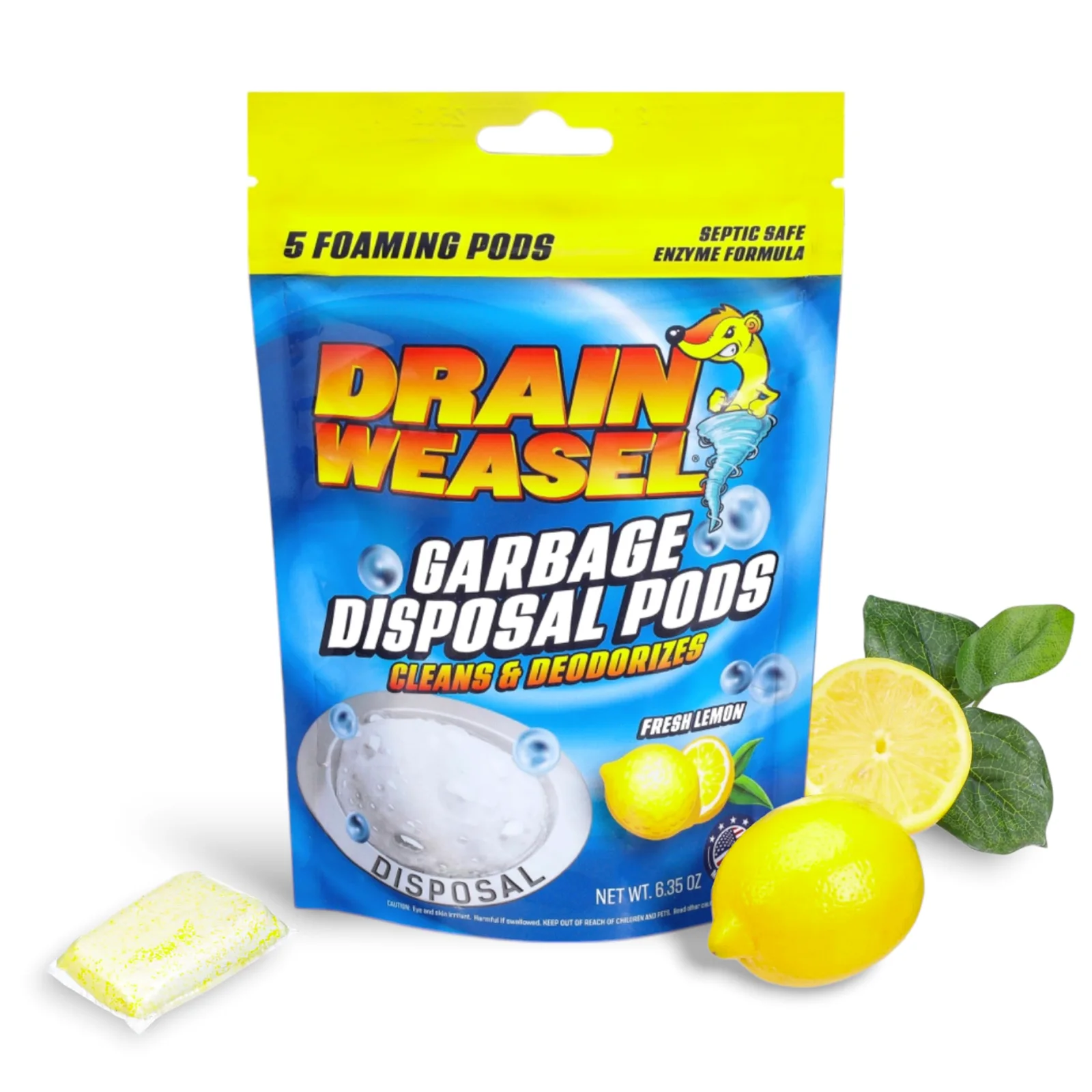
Food sticks to the grinding chamber and the rubber splash guard, and that is where the smell lives. The Drain Weasel disposal pods foam through the chamber while it runs: hot water turned down to a thin trickle, one pod in, a few seconds of running until the foam rises. The card asks for two pods in a larger disposal.
If your home is on a septic tank, the EPA advises using the disposal less, because everything it grinds ends up in the tank and the tank then needs pumping more often.
In the range
The FlexiSnake kitchen products

Ready when your drain is
Pick the drain, then the pack
Every kit, refill card and pack size in the FlexiSnake line is one click from here, and you pick the exact one on the next page.

The button opens the full range at our retail partner in a new tab.