

Bathroom sinks
How to Clear a Hair Clog From a Bathroom Sink With a Pop-Up Stopper

A bathroom sink rarely clogs all at once. For weeks the water takes a little longer to leave the basin, then one morning it sits there while you brush your teeth. Almost every time, the cause is hair, and almost every time it is caught within a hand's length of the drain opening. That is good news, because it means you can reach it from above.
Why the sink slows down
Look at what sits in the drain of most bathroom sinks: a pop-up stopper. Under the basin, a horizontal pivot rod enters the drain pipe from the back and lifts the stopper when you pull the knob behind the faucet. Between the stopper's stem and that rod, the drain is full of edges, and hair washed off a face or a hairbrush catches on them.
On its own, a few strands would let water past. The trouble starts when soap and toothpaste film coat the hair and glue the next strands to it. The mat grows on the stopper stem and around the pivot rod, and water has to seep through it. By the time you notice a slow drain, the mat can be thick enough to hold the basin half full.
None of this happens deep in the pipe. That is why a short tool from above is usually the right first move, before you think about the trap under the sink or a bottle of drain opener.
What to have ready
Gather everything before you start, because your hands will be busy once the wand comes up.
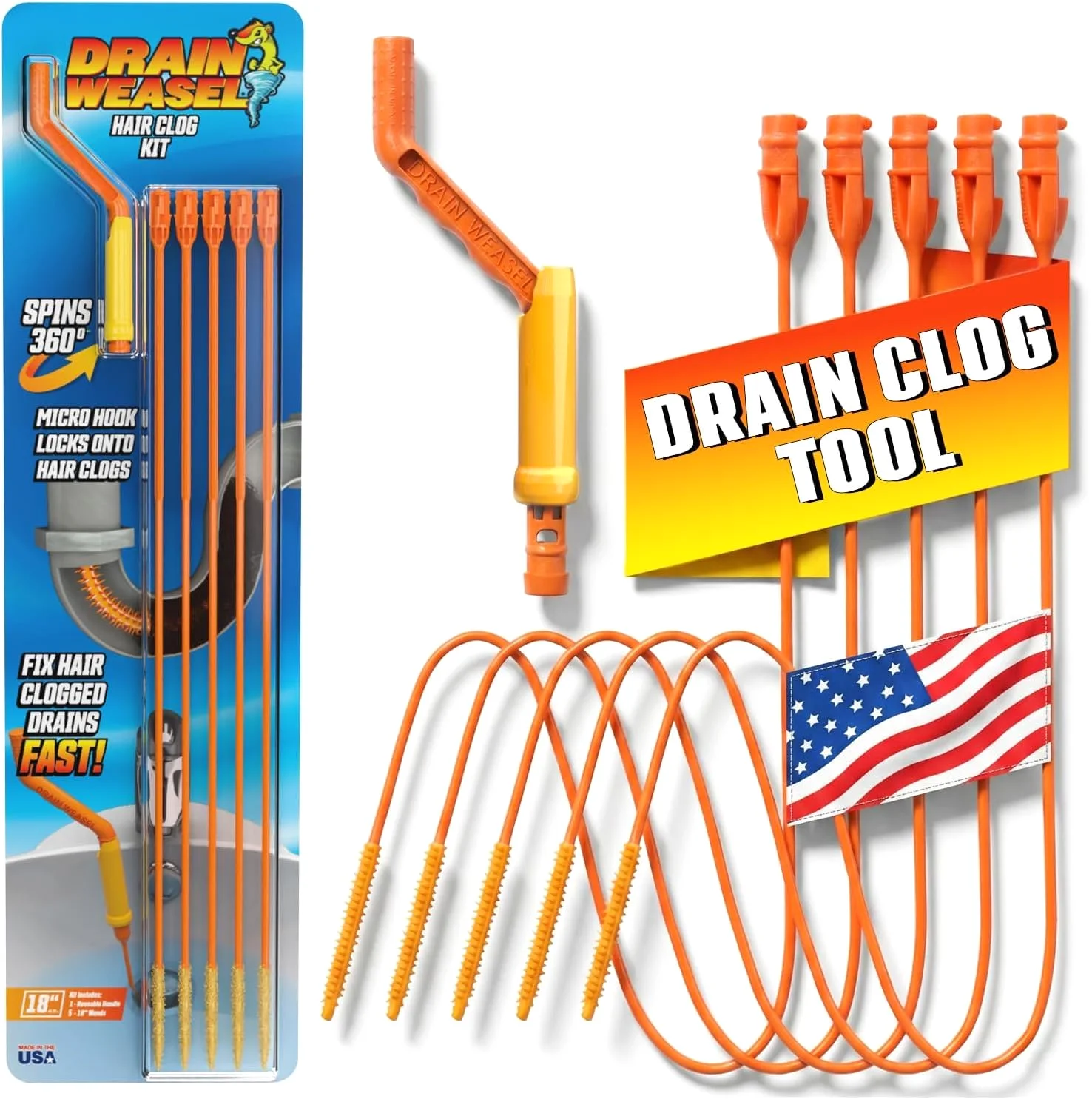
- A Drain Weasel handle and one wand. The orange handle is reusable; the wand is 18 inches long, about an eighth of an inch thick, with micro-hooks molded along it.
- A plastic bag, or the bin pulled up next to the sink. The used wand goes straight into it with the clog.
- A damp paper towel for the stopper.
- A flashlight, if you need to look under the sink at the pivot rod.
If the basin is full of standing water, that is fine. The wand works under water. Bail some out only if it is close to the rim, so nothing spills when you lift the stopper.

Getting the stopper out
The wand is thin enough to slide down beside many stoppers, so you can try it first without touching anything. If the stopper sits tight in the opening, though, take it out. The hair is wrapped around its stem anyway, and you get a clear path for the wand.
Many stoppers lift straight up. Others come out with a quarter turn. If yours does neither, it is held by the pivot rod. Look under the sink at the back of the drain pipe: a nut holds the rod where it enters the pipe. Loosen that nut by hand, slide the rod back a little, and the stopper lifts out from above.
Lay the stopper on the paper towel and pull off the hair you can see. When you are finished with the drain, the rod goes back into its hole, the nut is tightened by hand again, and you run a little water while you look under the sink for drips.
Using the wand
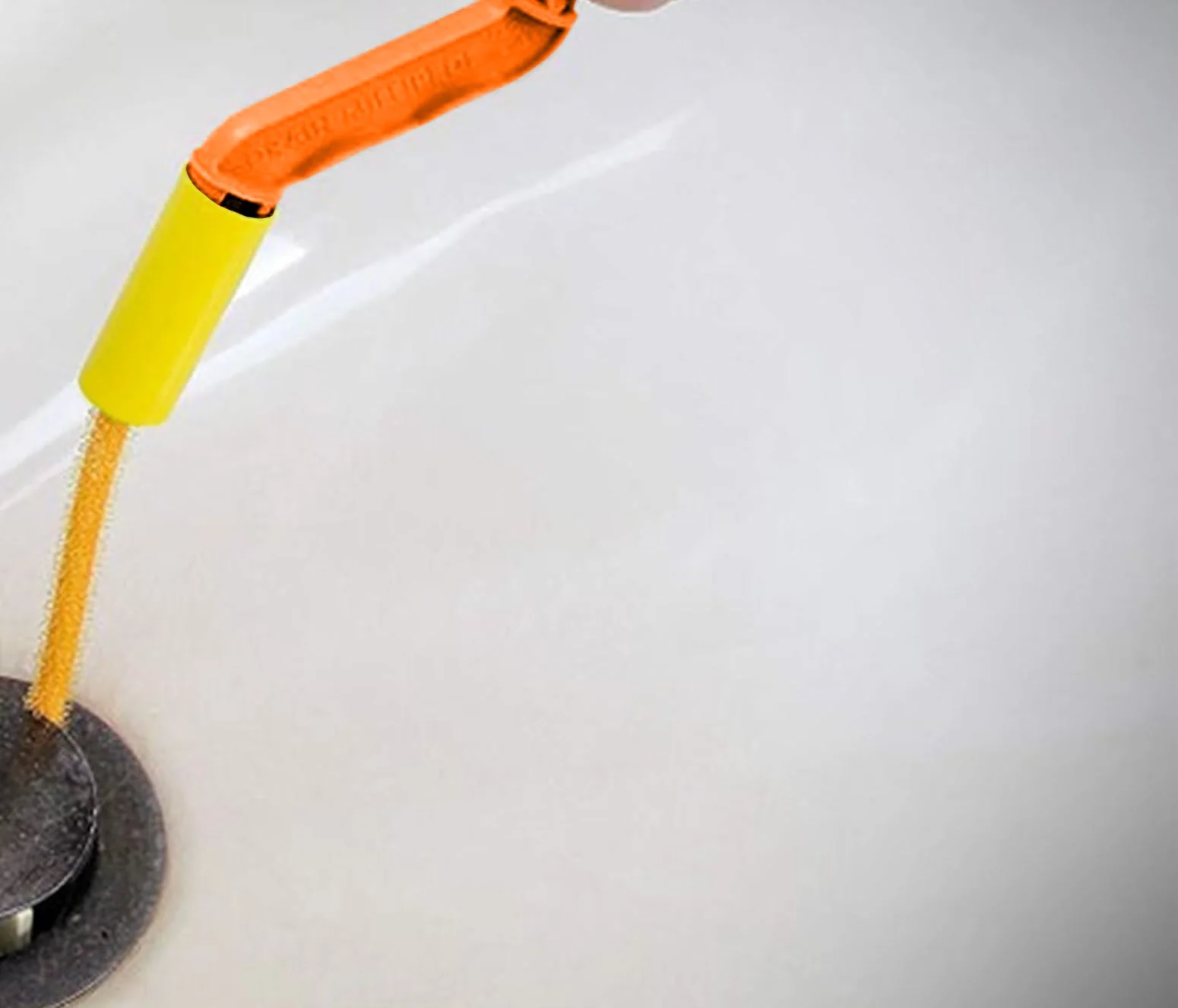
- Click the wand into the handle until it locks.
- Feed it down the drain opening, beside the stopper or into the open pipe if the stopper is out. Let it slide. If it stops, do not force it round a bend.
- Turn the handle a few times. The micro-hooks catch the hair and wind it around the wand, and you will feel the wand grip.
- Pull the wand straight up, over the bin.
- Click the used wand off the handle and drop it in the bag with the clog still on it.
- Run hot tap water for a minute and watch the basin. If the water still stands, repeat with a fresh wand.
The point of the disposable wand is in step five. You never pull a mat of hair off a tool with your fingers, and the handle goes back in the drawer clean.
When the wand comes back clean
A clean wand means the hair is not where the wand reached. The clog may sit in the trap below the sink or further along the pipe. The Drain Weasel Max carries wands of 20 or 30 inches on the same handle, and it is the next step for a clog that sits deeper than the standard wand goes.
| If the wand... | What it tells you | Next step |
|---|---|---|
| comes up with hair on it | the clog was at the stopper | run the water, repeat if needed |
| comes up clean, the water stands | the clog is further down | a longer wand, such as the Max |
| comes up clean twice, longer wand too | the blockage is beyond a hand tool | a licensed plumber |
| clears it, but another fixture backs up | the problem is in a shared pipe | a licensed plumber |
Two signs mean the job is no longer yours. One is a drain that stays slow after a longer wand comes back clean. The other is water rising in another fixture, a tub or a toilet, when the sink drains. Both point to a blockage in a shared pipe, and that belongs with a licensed plumber.
Keeping the sink clear
The easiest clog to clear is the one that has not finished forming. When you see hair on the stopper, wipe it off. When the basin starts to hold water for a few seconds after you rinse, run a wand down before the mat thickens.
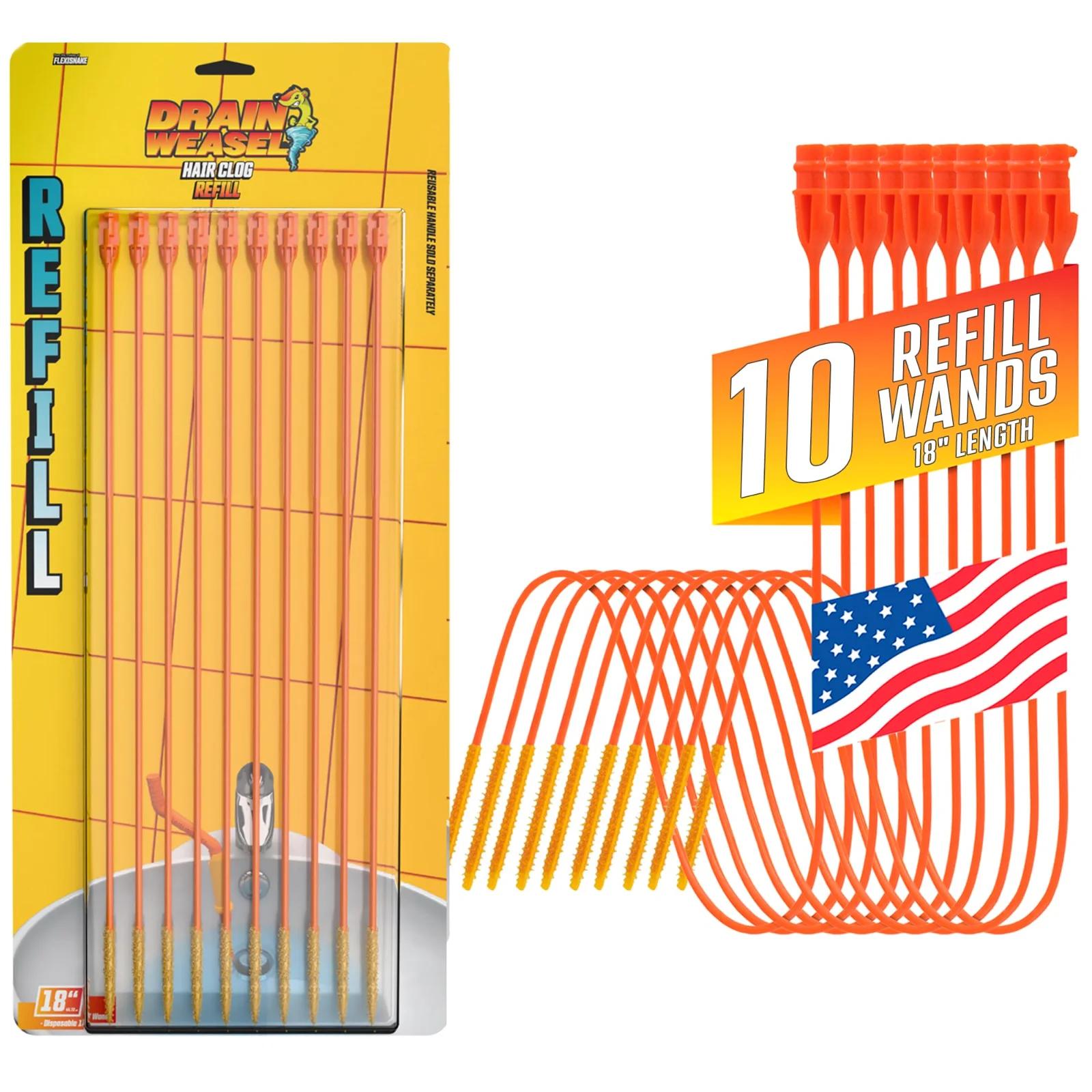
Keep wands under the sink so the job takes no planning. A refill card of five or ten fits the handle you already own, and a household with long hair goes through them faster than one without. If you would rather not throw wands away, the Pro kit has heavier wands with a ribbed shaft that you rinse and use again.

A pop-up stopper will always catch hair. That is its shape. What changes is whether you meet the mat when it is a few strands or when it is holding the basin full.